The Fine Art of Writing (or How I Avoid Staring Blankly at a Wall)
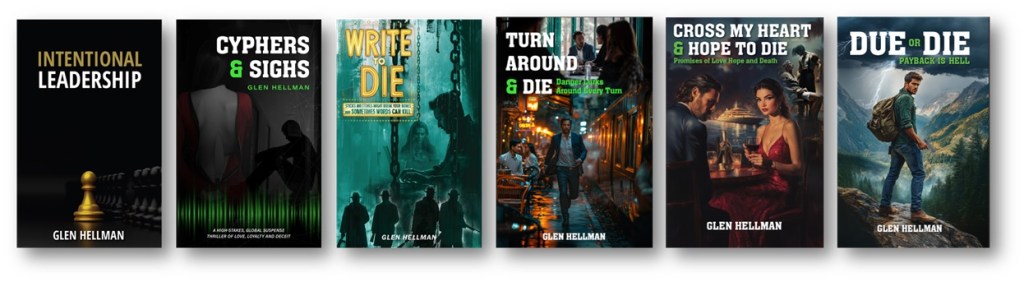
Every book starts with a premise—a simple “what if?” that worms its way into my brain and sets up camp. Take my book Cyphers and Sighs, for example. It began with: “What if the mysterious woman at the bar wasn’t just nursing a chardonnay but nursing a state secret because she’s a spy?” Boom. Premise in hand, we’re off to the races.
But before the race even begins, I like to acquaint myself with the contestants—er, characters. Who are these people that will bring my story to life? That’s where character profiling comes in. I’ll map out each major character’s backstory. Where did they grow up? What’s their relationship with their parents? What’s on their resume—besides “Proficient in Excel” (you’d be surprised how many spies list that).
This process isn’t just busywork; it’s the lifeblood of my writing. Understanding their personalities, motivations, and actions makes them jump off the page. And let’s be honest, sometimes it’s fun to “borrow” traits from people I know in real life. Got a friend who’s a bit too fond of conspiracy theories? Meet your new plot-twist machine. Knowing someone who talks in riddles? Instant dialogue gold.
Once my cast is assembled, I sketch out a rough outline of the story arc. Nothing fancy, just enough to know the general flow: Hero gets into trouble. Hero investigates. Hero faces the big bad troublemaker. Hero triumphs (or, occasionally, faceplants in a spectacularly entertaining way). The rest? That’s where things get spicy.
You see, I don’t believe in rigidly pre-planning every single beat. Life’s more fun with a little chaos, and so is writing. When I hit a crossroads, I make a choice. For example, in one book, I had a group of characters running from danger. Should they get away clean? Should the FBI swoop in? Or should a mobster blow up their getaway car? I was writing at my son’s house, so I asked him. He voted for the kaboom. And that decision opened a whole new world of possibilities (not to mention some excellent fireball descriptions).
This method of rolling with the punches is remarkably similar to my CEO coaching philosophy. You need to know where you’re starting, what resources (characters, plot twists, snarky sidekicks) you have, and where you’re headed (resolution, justice, maybe a cliffhanger). But beyond that? Focus on the next step. Forget the three ifs and a maybe; just keep moving forward.
To keep things lively, I maintain a running list of ideas, quotes, and metaphors that make me chuckle—sometimes it’s a one-liner, other times it’s a ridiculously convoluted analogy involving squirrels and stock markets. These little gems are the secret sauce that turns a decent chapter into something memorable.
And there you have it—my not-so-secret formula for writing books. It’s part planning, part improvisation, and a whole lot of trusting my gut (or, occasionally, my son’s love for explosions). Now, if you’ll excuse me, I’ve got a spy to rescue and a mobster to outwit—or maybe I’ll blow something else up. Decisions, decisions.
Link Here To Order From Amazon Today